
The Gate, the Map and the Season: A Better Pre-Hunt Access Check
Navigating Access Before Your Hunt
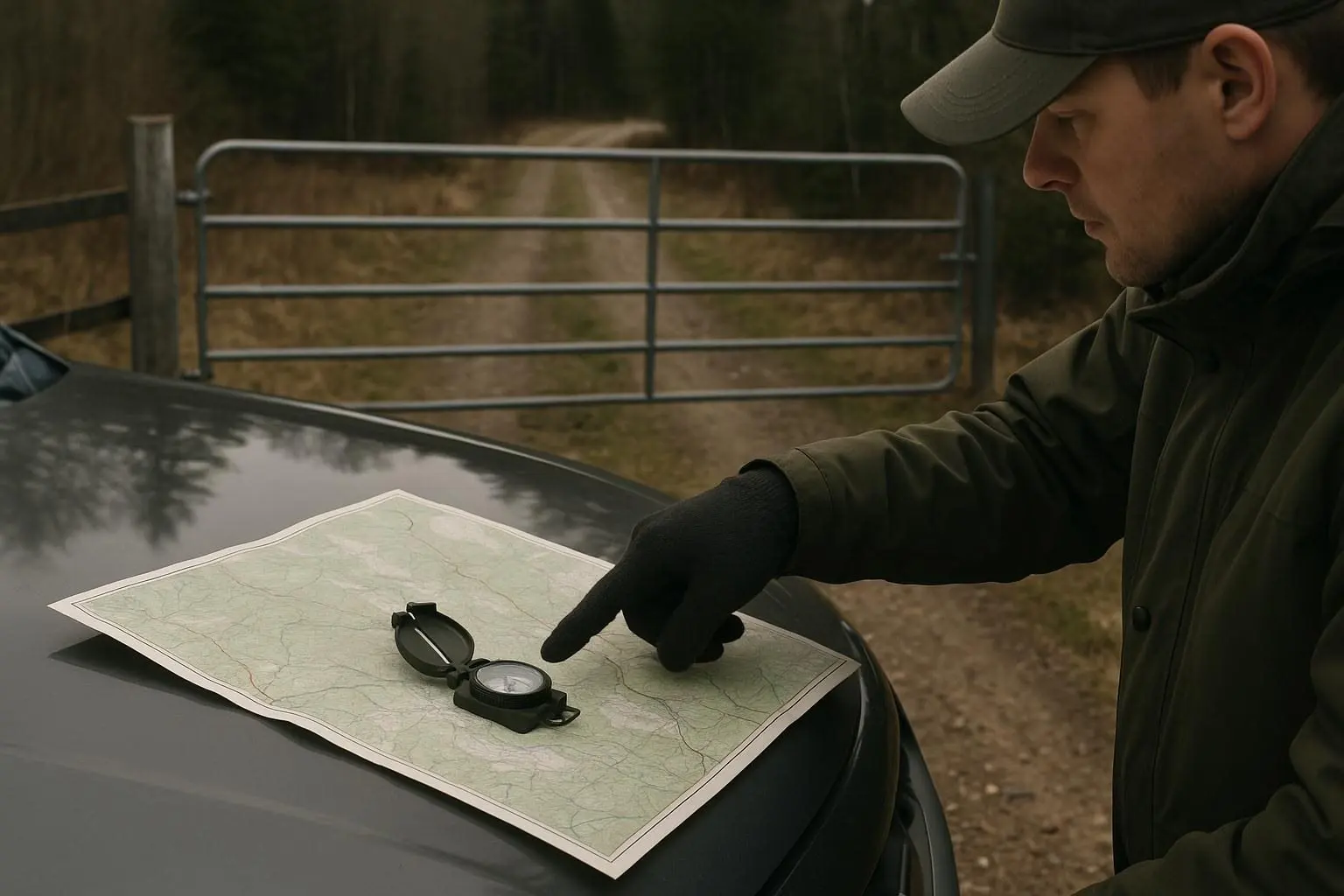
Imagine arriving at a gate that's exactly where your map says the path should be open. The sign there shows a closure date that surprises you. As the sun goes down and your phone has no signal you realize that the alternative route means crossing a line. This small problem can lead to issues. Doing an access check before you leave not keeps you safe and your hunting rights but also protects the wildlife areas nearby and helps you make better choices when conditions change.
Understanding Boundaries and Permissions
Even though aerial maps and apps help with planning you shouldn't depend on them alone to check access. In life property lines can be unclear. Roads might be private. A public land area might be surrounded by properties that need your permission to pass. Just because a digital map shows something doesn't mean you can go there.
Before you go get the, up-to-date maps. Compare them with access details from land managers, public agencies or landowners. Look for things like named gates, parking areas, seasonal limits and trail rules. Always find one alternative legal route instead of assuming you can get past any problem.
When you ask for permission get all the details. Know the properties involved the time frame, who is involved and what is allowed. Also find out about restrictions on vehicles, dogs, camping and retrieving animals. If the permission is given on the phone write it down. Keep the contact info. Sending a reminder before your trip can help avoid problems if you end up in the place.
Stay Updated on Hunting Regulations
Hunting rules are not details to read once you have your license. Dates, tools, tagging rules and reporting rules can change and they often differ by season and area. It is important to check the rules for the place and animal you are hunting not just old papers or summaries from last year.
Double-check the hunting area the season, the definition of the animals and any needed papers. If you are not sure call the agency of relying on secondhand info, which can be wrong. Regulations can change close to your trip date. It is an idea to check them again and have a copy that you can use when there is no internet.
Also spend time learning what to do after a catch. Know how to tag the animal how to carry it and what reports are needed. It is important for hunters to plan the steps needed before they go into the field.
Visualizing Your Route
The shortest way on a map might not be the easiest or safest in life. Think about where you will park to avoid blocking access. Check how far you will have to walk with your gear and see if creek crossings are safe after rain. Think about what to do if you get hurt if the weather turns bad or if it gets dark. If your path depends on a vehicle check the ground. How to get back if things go wrong.
When checking your gear match what you bring to the land and the tasks ahead. A lighter load might be better for walks. Don't forget the basics like water, weather gear, navigation tools and communication devices. On the hand bringing much can be dangerous especially on steep or slippery trails. The key is to decide if you can manage without something, not just how heavy it is.
Tell a friend or family member about your parking plan, when you will be back and when they should act if you don't check in. Always see your plan as a backup not as a substitute for decisions. Sometimes the best choice is to end the trip early if things go wrong.
Minimize Habitat Disturbance
Decisions about access can affect more than the hunter. Traveling much through areas can make trails bigger hurt riverbanks and disturb breeding or wintering places. A closed gate might be dangerous. It could also be a way to protect recovery work, animals, fragile areas or seasonal wildlife plans.
Whenever possible use the existing parking and trails. Don't try to go around closures or make your parking areas especially when there are spots taken. Keep vehicles away from meadows and sensitive places; shortcuts might look good. They can cause damage. During times follow the rules on fires, smoking and moving vehicles because one mistake can harm areas and limit access for everyone.
Also treat gates as they are keep dogs on a leash when needed and take all your trash with you. If you see signs or a blocked gate tell the land manager instead of trying to make a new way that could cause bigger issues.
Finalizing Your Departure
A short list can help you catch things you might miss before you go. In those minutes make sure:
– The recent rules, papers, hunting dates and reporting rules for the place you are going.
– Clear papers of any permission you got including the lines. What is not allowed.
– A legal way to get in and a parking plan that avoids closed areas.
– The weather, daylight, the land and a plan to check in with someone.
– Essential things like navigation tools, communication devices, water, first aid and gear needed for the field.
– What to do about tagging, carrying, cleaning up gate behavior and keeping the land safe.
If something feels wrong think about waiting or going to a place. Ethical hunting means respecting animals the lines and the rules-none of these should be left to chance or decided after the fact. Usually the best preparation leads to a day of hunting of respect, for the land and the wildlife.